


Table of Contents
- Why Custom Dog Collars Beat Off-the-Shelf Gear
- How to Measure a Dog Collar for a True Fit
- Dog Collar Sizing Guide: Width, Weight and Wear
- Leather, Hardware and Crystals: What the Specification Tells You
- Custom Dog Collars for Training, Sport and Everyday Wear
- Leather Dog Collar Care That Protects the Fit
- Custom Dog Leashes: Matching the Set to the Collar
- Conclusion
- Frequently Asked Questions
Last Updated: October 20, 2026
Why Custom Dog Collars Beat Off-the-Shelf Gear
Custom dog collars are made to your dog's measurements, chosen materials and preferred hardware, rather than picked from a shelf in a fixed size.
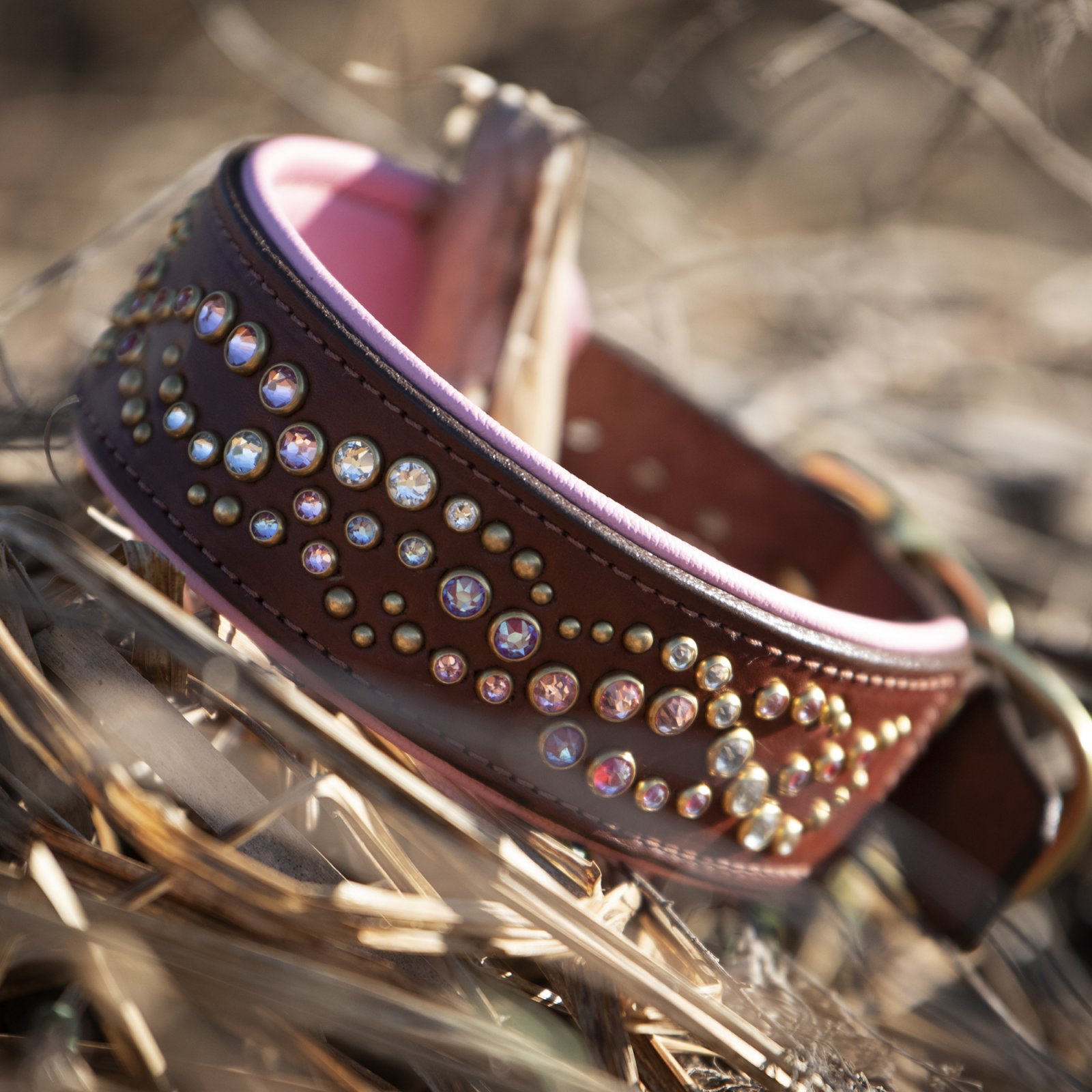
The Mini Mardi Gras | Wide Custom Dog Collar
Off-the-shelf collars are built around an average neck. Your dog is not average. A collar that sits too loose can slip over the head during a startle; one that sits too tight rubs the coat and restricts the throat on lead.
Durability is the second gap. Generic collars often pair thin leather with plated hardware that pits and flakes. A bespoke collar uses full grain leather and solid hardware chosen for the life the dog actually leads.
Below, we explain how to measure, choose materials and care for a collar so it lasts.
How to Measure a Dog Collar for a True Fit
To measure a dog collar, wrap a soft tape around the base of the neck, where the collar naturally sits, and add two fingers of slack. That number is your dog's neck measurement. Order a collar sized to that figure, not to the length of the old collar.
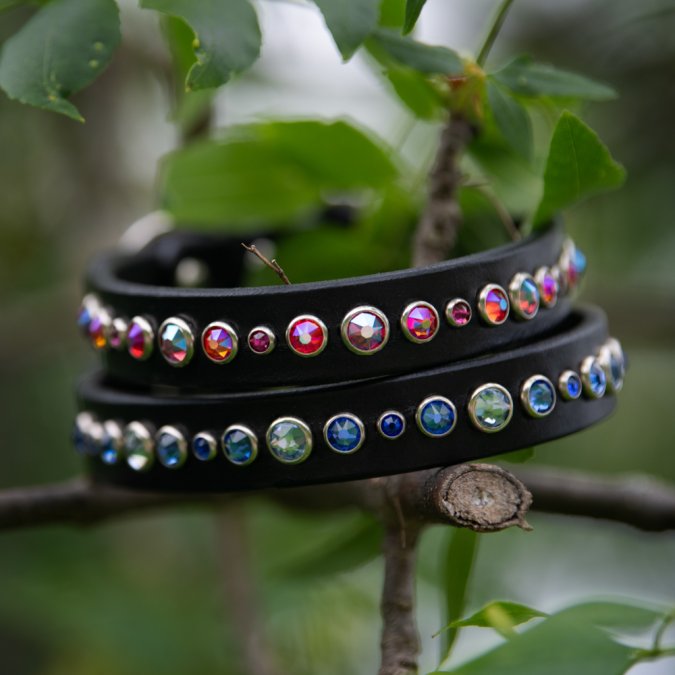
The Mini Siri | Custom Dog Collar
Most fitting mistakes come from measuring the wrong place. The collar sits high on the neck, behind the ears and under the jaw, not down on the shoulders.
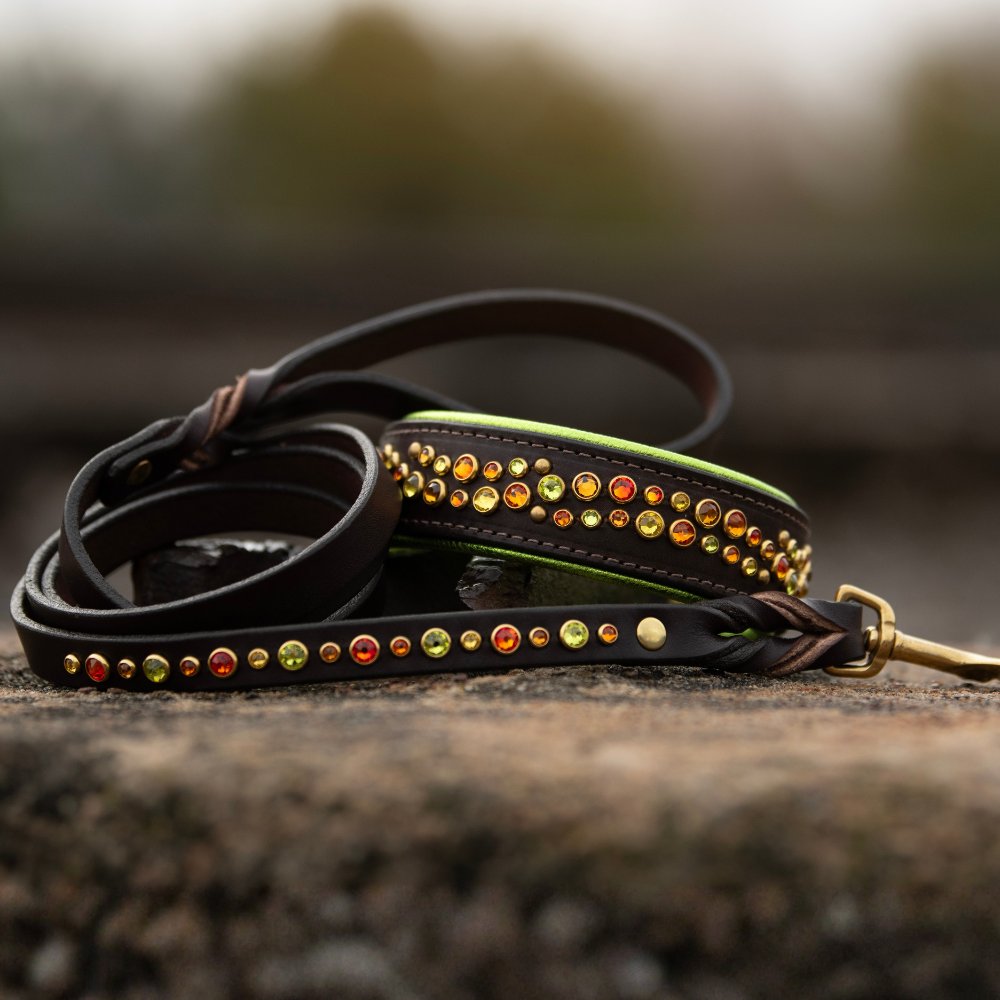
How Long Do Custom Leather Collars Last? A 2026 Guide
Two Numbers That Decide the Fit
You need two figures, not one:
- Neck measurement: the circumference at the collar's resting position.
- Collar width: the height of the collar itself, which affects comfort and how the collar distributes pressure.
Width matters as much as length. A narrow collar suits a small or fine-boned dog; a wide collar spreads load better on a strong, thick-necked dog. Our Canadian Kennel Club guidance on responsible dog ownership is a useful starting point for understanding your breed's build before you order.
If you are between sizes, size up and use the adjustment range. A collar with a few holes of movement gives you room as the coat thickens in winter or thins in summer.
Dog Collar Sizing Guide: Width, Weight and Wear
A dog collar sizing guide should match collar width to the dog's size, neck strength and daily activity, then show you how to confirm the fit on the dog rather than on a tape measure alone. A 1.25 inch collar suits most medium and large dogs for everyday wear, while a 2 inch collar is built for long necked sighthounds and large dogs.
Here is how we would match width to the dog:
Dog profile |
Suggested width |
Why it works |
|---|---|---|
Small or fine-boned |
3/4 inch |
Light on the neck, no bulk |
Medium, everyday wear |
1.25 inch |
Balanced comfort and support |
Strong or thick-necked |
1.5 to 2 inch |
Spreads pressure across the neck |
Training and sport |
1.5 to 2 inch |
Stable under lead pressure |
Weight and coat matter too. A dog with a heavy winter coat may need a slightly larger size in the same width. Puppies need a collar that adjusts as they grow, checked weekly.
How to Check the Fit Once the Collar Arrives
Put the collar on and fasten it at the hole that gives you a two-finger gap between band and neck. Then run three checks:
- Slip test: with the collar fastened, try to ease it gently over the dog's head. If it slides off without unfastening, it is too loose for a dog that startles or backs out of gear.
- Two-finger rule: you should be able to slide two fingers flat under the band at the front of the neck. One finger means too tight; three or more means too loose.
- Movement check: watch the dog walk, sit and lie down. The collar should sit behind the ears and under the jaw without riding up or twisting. A band that rotates so the D-ring sits under the throat is too loose.
Recheck the fit after the first week, then monthly. Leather softens and stretches slightly with wear, so a collar that was snug when new may need to move one hole tighter after a month.
Matching Hardware to the Dog, Not Just the Collar
Width is only half the sizing decision. The buckle and D-ring carry the load, so match them to behaviour:
- Puppies and small dogs: a lightweight buckle and a narrow D-ring keep the collar from weighing down a small neck. Check the fit weekly during growth spurts.
- Strong pullers and adolescent dogs: a solid buckle with a sturdy D-ring, paired with a wider collar, distributes pressure and reduces the chance of hardware failure under a sudden lunge.
- Sensitive skin or thin coats: a padded lining and a smooth, burnished edge reduce rubbing at the throat and behind the ears.
- Senior dogs: a softer, padded collar in a moderate width is easier on thinning coat and stiff joints than a stiff wide collar.
Leather, Hardware and Crystals: What the Specification Tells You
The specification tells you how a collar will age. Full grain leather, solid brass or nickel plated brass hardware and properly set crystals are the marks of a piece built to last.
Full grain leather is the top layer of the hide, with the natural grain intact. Our collars are cut from premium full grain English Bridle leather, chosen for exactly this reason.
The Mini Siri | Custom Dog Collar →
Hardware should be solid, not welded. A secure buckle and a sturdy D-ring are what stand between your dog and a slipped collar. Check that the buckle prong seats cleanly and that rivets sit flush.
Crystals should be set, not glued. Genuine Swarovski™ crystals, properly mounted, hold their place through daily wear. Swarovski's guidance on crystal care explains why heat and harsh cleaners damage settings.
Custom Dog Collars for Training, Sport and Everyday Wear
A collar for training has different demands from a collar for the show ring. Training and sport ask for strength, a stable fit under lead pressure and hardware that will not fail. Everyday wear asks for comfort and looks. The right choice depends less on breed than on age, behaviour and coat.
Suitability by Age and Behaviour
- Puppies: a light, adjustable collar in a narrow width, checked weekly as the neck grows. Avoid heavy hardware that weighs down a small neck.
- Strong pullers and adolescent dogs: a wider collar, a padded lining and solid hardware. Padding spreads pressure at the throat when the dog pulls and reduces rubbing on the coat.
- Sensitive skin or thin coats: a padded lining and a smooth, burnished edge. Check behind the ears and under the jaw after walks for redness.
- Senior dogs: a softer, padded collar in a moderate width is easier on thinning coat and stiff joints than a stiff wide collar.
- Dogs in sport or working roles: a wide, padded collar with secure fastening and a sturdy D-ring, so the collar stays stable under lead pressure.
Matching the Collar to the Work
For working dogs, we recommend a wider collar and a padded lining. Padding reduces rubbing on the throat and spreads pressure when the dog pulls. Our The Mini Mardi Gras | Wide Custom Dog Collar is a 2 inch padded piece built for dogs that spend their days outdoors. For a lighter everyday option, The Silas | Custom Dog Collar offers a 1.25 inch padded collar in a refined, lightweight package.
A Quick Decision Path
- Measure the neck at the collar's resting position and note the width of the current collar.
- Match width to the dog's build and work using the sizing guide above.
- Choose hardware for the load: lightweight for puppies and small dogs, solid for strong pullers.
- Choose a padded lining if the dog has sensitive skin, a thin coat or pulls hard.
- Recheck the fit after the first week and monthly thereafter.
Leather Dog Collar Care That Protects the Fit
Leather dog collar care is simple: clean with a damp cloth, condition the leather two to four times a year, and keep the collar dry. Care protects the fit as much as the finish, because dry leather stiffens, cracks and stretches out of shape.
- Wipe the collar after muddy walks and let it air dry away from direct heat.
- Apply a leather conditioner sparingly and buff off the excess.
- Check the buckle, D-ring and rivets monthly for looseness.
- Inspect crystals for missing stones after rough play.
- Store the collar flat, not hung, so the leather does not crease.
Avoid soaking leather or drying it on a radiator. Both strip the oils that keep the band supple. A well-cared-for collar holds its shape and its fit for years.
Custom Dog Leashes: Matching the Set to the Collar
A custom dog leash should match the collar in leather, width and hardware so the set wears evenly and looks deliberate.
When you order a leash, choose the same leather as the collar. A full grain Bridle leather lead ages at the same rate as the collar, so the set stays consistent.
Length is the other decision. A shorter lead gives more control in training and crowded spaces; a longer lead suits relaxed walks and sniffing. Handle style matters for grip and comfort on long days.
For a set with real presence, our The Starlight | Maximum Sparkle 1.5" Wide Custom Leather & Crystal Dog Collar pairs well with a matching lead.
Conclusion
Getting the fit right takes ten minutes with a soft tape, and it is the difference between a collar your dog forgets about and one that rubs, slips or fails at the worst moment.
That is exactly how we build every collar at Fusion By Design Collars. Each piece is handcrafted in Canada from premium full grain English Bridle leather, set with genuine Swarovski crystals, and made to order with our right fit, right style guarantee and free worldwide shipping.
Choose your design and get a collar built for your dog's neck, your dog's work and your dog's style.
Frequently Asked Questions
How do I measure my dog for a custom collar?
Use a soft tape around the base of the neck, where the collar normally sits, and keep two fingers under the tape so the fit is snug but not tight. Note that number, then measure the width of a collar your dog already wears comfortably. take the reading twice and write it down before ordering.
How should a dog collar fit?
A well-fitted collar sits high on the neck behind the ears and lets you slide two fingers underneath without force. It should not rotate freely or slip over the head, and it should not press into the throat when your dog pulls. Recheck the fit after the first week, because leather softens and settles, and again whenever your dog's coat thickens or thins with the season.
Are leather dog collars comfortable for everyday wear?
Full-grain leather softens with wear and moulds to the neck, which is why padded leather collars suit dogs that wear them all day. The lining matters as much as the outer leather: a padded inner layer cushions the neck and reduces rubbing during long walks or training sessions. Check the edges for smooth finishing, since rough edges cause more irritation than the leather itself.
How do you care for a leather dog collar?
Wipe the leather with a damp cloth after muddy walks and let it dry away from direct heat, never on a radiator. Apply a leather conditioner sparingly a few times a year to keep the leather supple, and keep crystals away from abrasive cleaners. Store the collar flat when it is not in use, and check the hardware and stitching monthly for wear.