


Last Updated: October 30, 2026
Quick Summary
To remove water stains from a leather collar, let it air-dry fully, then wipe the entire collar evenly with a barely damp cloth of distilled water rather than spot-treating the ring. Blot the stain, air-dry away from direct heat for 12 to 24 hours, then condition the leather.
- Water stains are a contrast problem, so dampen the whole collar evenly, not just the ring.
- Air-dry a damp collar flat at room temperature for at least 12 hours before working on it.
- Work in sections of roughly 4 to 6 inches, overlapping each pass by about an inch.
- Never speed-dry leather on a radiator or in direct sun, as cracking is permanent.
- Test any method on a hidden area near the buckle and wait at least an hour.
Table of Contents
- Why Water Stains a Leather Collar (and What Kind You're Dealing With)
- How to Remove Water Stains From a Leather Collar: Step by Step
- How to Clean a Leather Dog Collar Without Over-Wetting It
- Choosing a Leather Cleaner for Dog Collars
- How to Dry a Wet Leather Collar Safely
- How to Condition a Leather Dog Collar After Cleaning
- When to Stop and Seek Professional Leather Care
- Choose a Collar Built to Handle the Outdoors
- Frequently Asked Questions
Why Water Stains a Leather Collar (and What Kind You're Dealing With)
A water stain on a leather collar is a dark ring left when moisture soaks into the hide and dries unevenly, pushing tanning oils and dyes outward to the edges. Full grain leather is a durable material, and most water marks are cosmetic rather than structural.
You are not removing a stain in the usual sense. You are rebalancing moisture across the whole piece so the edge stops being visible.
Water marks versus dirt, oil and salt stains
Before you touch anything, work out what you are actually looking at. For a fuller look at leather collar care issues like chafing and moisture damage, read our seven-step guide. The treatment differs.
- Water marks: pale or dark rings with a defined edge, often from rain, a wet walk, or a spilled bowl.
- Dirt: grey-brown grime sitting on the surface, usually around the buckle and the contact points.
- Oil stains: dark, soft patches that spread slowly and feel greasy to the touch.
Water and salt both respond to gentle, even dampening. Oil needs a degreasing approach; treat an oil patch like a water ring and you push the oil deeper.
How leather type and finish change the approach
Not all leather behaves the same way, and this changes how much water you dare use. If you are unsure which type you have, our full grain versus bonded leather guide explains how to tell them apart.
Finish matters too. A smooth, sealed finish resists water and wipes clean easily. An unfinished or oiled finish drinks it in and needs a slower, more even approach.
How to Remove Water Stains From a Leather Collar: Step by Step
Here is a method for a water-marked collar, in order. Work slowly, keep the whole collar involved rather than just the ring, and read the whole sequence before you start.
- Let the collar air-dry fully first. Never work on damp leather. Hang it flat at room temperature for at least 12 hours, longer in humid weather.
- Wipe off loose dirt with a soft, dry cloth, working along the grain, especially at the buckle end and contact points.
- Dampen a clean, lint-free cloth with distilled water and wring it out until barely damp. Press it against a dry paper towel: if it leaves a wet patch, it is too wet.
- Wipe the entire collar evenly, not just the stain, in long overlapping strokes from one end to the other, including the back face, so the whole piece reaches the same faint dampness and the drying edge has nowhere to form.
- Blot the stain area with a dry cloth. Do not rub; blotting lifts excess moisture without disturbing the finish.
- Air-dry away from direct heat, then condition. Give it 12 to 24 hours at room temperature before judging the result.
Water stains are a contrast problem. Dampen only the ring and you create a new edge and a fresh water ring. Evening out the moisture across the full length removes the contrast, and the mark fades as it dries.
How much water and how long: a practical guide
Most people fail here because they use too much water and too little patience. As a working rule:
- One light pass per section. Dampen the cloth once, wipe a section, then move on.
- Work in sections of roughly 4 to 6 inches, overlapping each pass by about an inch so there is no seam of dry leather.
- Keep total contact time short. A few seconds per pass, not minutes. You are rebalancing surface moisture, not soaking the hide.
Branching by leather type
How much you dare dampen depends on the leather.
- Full grain and top grain finished leather: the safest candidates for even dampening. The sealed surface slows water uptake, so a barely damp cloth is enough.
- Oiled or waxed leather: takes water more readily and darkens as it dampens. Work in smaller sections, expect patchy colour until dry, and condition afterwards without fail.
- Aniline and other unfinished leathers: absorb water fast and can spot permanently. Test on a hidden area first, and if the colour shifts at all, stop.
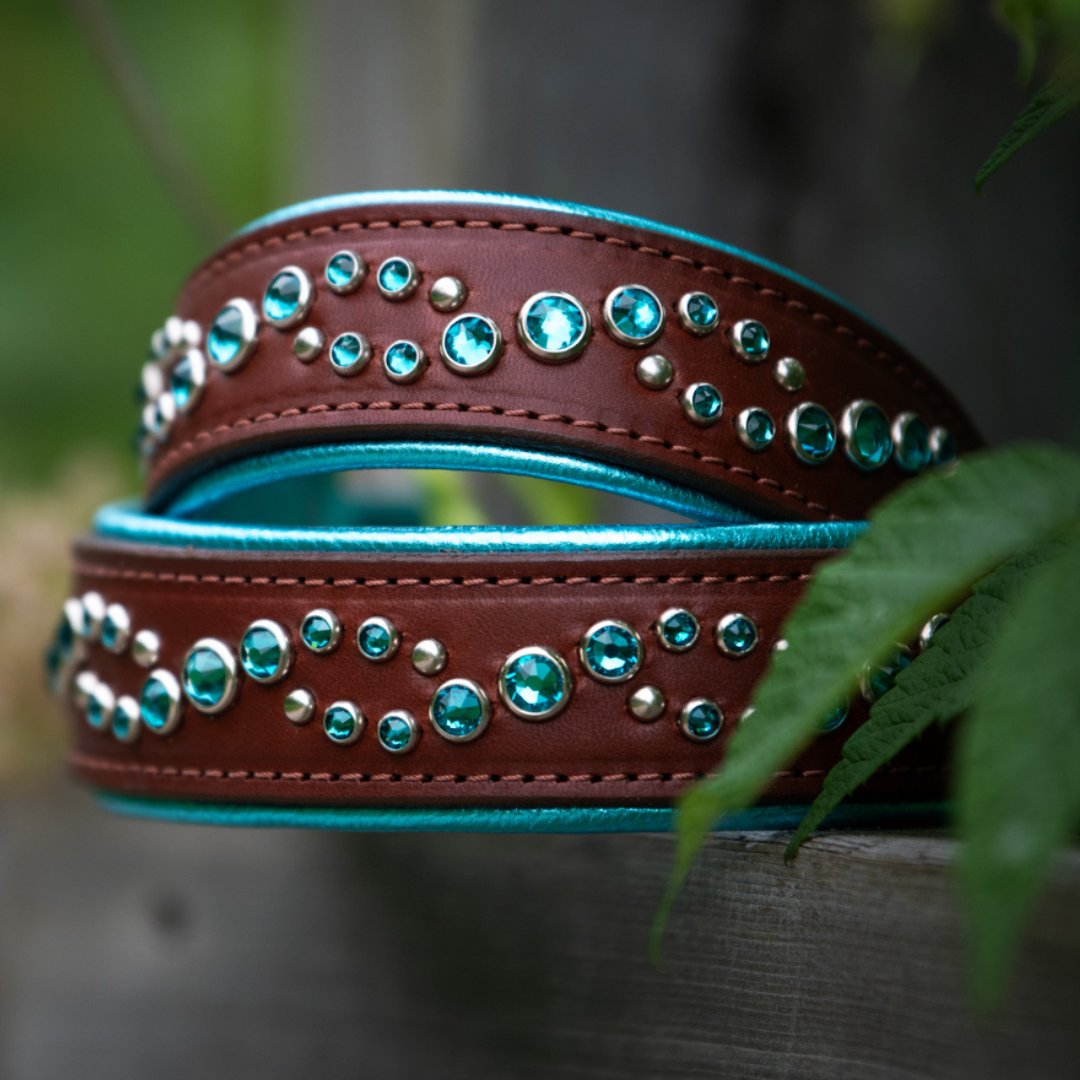
Test a patch first and avoid the water ring
Always test on an inconspicuous area first, such as the inside of the collar near the buckle. Apply your cloth there and let it dry for at least an hour. If the colour shifts badly or the finish dulls, stop and reassess.
A common mistake is scrubbing hard at the ring. That lifts the finish and makes the mark worse. Gentle, even work beats force every time.
If the stain does not lift: troubleshooting
Sometimes the ring survives the first attempt. Let the collar dry completely for a full day and look again; many marks look worse while damp. If it is still there:
- The ring has darkened rather than faded. You likely over-wetted the area. Stop, let it dry for 48 hours, and condition lightly. Do not add more water.
- The ring has spread into a larger patch. The moisture was not even. A full-length even pass, not a spot treatment, is the next step.
- The surface feels rough or the finish looks dull. You have lifted the finish. Stop cleaning and condition; if it does not recover, it needs a professional.
How to Clean a Leather Dog Collar Without Over-Wetting It
Over-wetting is the single biggest cause of new damage during cleaning. For a fuller walkthrough, see our guide on how to clean a leather dog collar. Leather is skin.
Keep water use to a minimum with these habits:
- Use a barely damp cloth, never a wet one.
- Clean in sections, not by dunking.
- Keep water away from the buckle holes and stitching.
A mild soap helps lift grime without soaking the hide. Saddle soap or a pH-balanced leather soap applied sparingly with a damp cloth is the standard approach. Rinse by wiping with a clean damp cloth, then blot dry.
Choosing a Leather Cleaner for Dog Collars
Pick a cleaner made for leather, not for cars, shoes or household surfaces. A leather cleaner for dog collars should be mild, pH-balanced, and free of harsh solvents that strip the tanning oils.
The Mini Siri | Custom Dog Collar →
What to look for:
- Mild soap or saddle soap for routine cleaning.
- A dedicated leather cleaner for set-in marks.
- No bleach, no ammonia, no harsh detergents.
Avoid home remedies that circulate online. Hydrogen peroxide and strong vinegar mixes can bleach or dry the finish. Baby shampoo and castile soap are gentler alternatives if you are caught short, but use them sparingly, rinse well, and test on a hidden patch first.
How to Dry a Wet Leather Collar Safely
Drying is where most people undo their good work. The rule is simple: slow and even, away from heat. Whether a collar dries flat and supple or stiff and cracked comes down to airflow, temperature, and how it is positioned.
- Blot off surface water with a dry cloth before you do anything else. Press, do not wipe, so you lift standing water without spreading it into dry areas.
- Reshape the collar so it dries flat and does not curl. Lay it on a clean towel with the buckle end supported and gently straighten any curl by hand. Do not hang a wet collar by the buckle; the weight of the damp leather pulls it out of shape.
- Air-dry at room temperature, out of direct sunlight, in a shaded, well-ventilated room. Moving air matters more than warmth: a gentle draught or a fan on its lowest setting speeds drying safely.
How long drying actually takes
There is no single answer, because humidity and airflow do most of the work. As a practical guide:
- A lightly dampened collar from cleaning: 12 to 24 hours at room temperature.
- A collar soaked in rain: 24 to 48 hours, turned every few hours.
- Humid weather or a damp room: add another day, and use a fan to keep air moving.
Judge dryness by feel, not by the clock. The leather should feel cool but not clammy, and the edges and stitching should be dry to the touch. If any part feels cool and slightly soft, it is still holding moisture.
Preventing mould and mildew
A wet leather collar left in a damp bag will grow mould, which shows as a fuzzy grey or white bloom, often in the stitching and along the edges.
The prevention habit is simple: if you have been caught in the rain, dry the collar properly the moment you get home. Do not leave it in a bag, a car, or a damp hallway.
If drying goes wrong
- The collar has dried stiff and hard. Condition it lightly and work it gently by hand, flexing along its length. Repeat over a few days rather than soaking it with conditioner in one go.
- The collar has curled out of shape. Dampen it very lightly and evenly, reshape it flat, and dry it again with weight on the ends. Do not force a dry, stiff collar back into shape.
- A new water ring has appeared after drying. The moisture was uneven. Let it dry fully, then do one even full-length pass with a barely damp cloth and dry again.
Drying times depend on how wet the collar is and the conditions in the room.
Situation |
Drying time |
Note |
|---|---|---|
Lightly dampened collar from cleaning |
12 to 24 hours |
At room temperature |
Collar soaked in rain |
24 to 48 hours |
Turn every few hours |
Humid weather or damp room |
Add another day |
Use a fan to keep air moving |
Air-drying before stain removal |
At least 12 hours |
Longer in humid weather |
Waiting before judging stain result |
12 to 24 hours |
At room temperature |
Patch test on hidden area |
At least an hour |
Stop if colour shifts badly |
Over-wetted ring that darkened |
48 hours |
Then condition lightly, no more water |
How to Condition a Leather Dog Collar After Cleaning
Cleaning strips some oils, so conditioning is not optional. Our guide to caring for your collar walks through the conditioning steps in detail. It keeps the leather supple and stops it drying out and cracking later.
- Wait until the collar is completely dry.
- Apply a small amount of leather conditioner with a soft cloth.
- Work it in evenly across the whole collar, not just the cleaned area.
Condition after every deep clean, and lightly every few months for a collar in regular use. A well-conditioned collar also resists water better, because the oils help repel moisture before it soaks in.
When to Stop and Seek Professional Leather Care
Some damage is beyond a cloth and a bit of conditioner. Stop and get professional help if you see:
- Cracking or splitting in the leather surface.
- Peeling or flaking finish, common on bonded leather.
- Mould or mildew that has spread into the fibres.
Water damage that has dried hard and cracked will not reverse with home treatment. A professional leather specialist can assess whether the piece is salvageable. For a collar that is failing structurally, replacement is the safer choice, especially for a dog in training or competition where a weak collar is a real risk.
Choose a Collar Built to Handle the Outdoors
The best defence against water stains is a collar made from leather that handles moisture well in the first place.
At Fusion By Design Collars, our collars are handcrafted in Canada from premium full grain English Bridle leather, made to order, and built to withstand daily wear and training.
Water stains are a nuisance, but they are rarely permanent. The real challenge is choosing leather that resists them and caring for it properly over years of walks, training and travel.
Frequently Asked Questions
Can water permanently stain a leather collar?
A water mark is usually a temporary change in the leather's surface oils rather than permanent damage. Most light water spots fade once the collar dries evenly and is reconditioned. Deep soaking or repeated wetting can strip oils and cause lasting stiffness or cracking, which is why blotting rather than rubbing and air-drying away from direct heat matter so much. If a mark stays after drying and conditioning, a professional leather specialist can assess whether the finish needs restoring.
Should you wet the whole leather collar to remove a water mark?
Wetting the entire collar is a common trick for blending a water ring, but it carries risk. Full saturation can soften the leather, weaken stitching over time and leave the collar stiff as it dries. A safer route is to dampen only the marked area with a barely damp cloth, work gently, and let it air-dry naturally. If the ring persists, dampen slightly beyond the mark to blend the edges rather than soaking the whole collar.
Can you use vinegar to remove water stains from leather?
A diluted white vinegar solution is sometimes suggested for water marks, but vinegar is acidic and can dull or dry out some leather finishes. Test it on an inconspicuous area first and use it sparingly on a soft cloth rather than pouring it on. For most water stains on a leather collar, plain distilled water and a gentle clean cloth are enough. If vinegar leaves the leather looking dry, follow with a leather conditioner once the collar is fully dry.
How do you condition leather after cleaning a water stain?
Wait until the collar is completely dry, then apply a small amount of leather conditioner with a soft cloth, working it in gently and wiping off any excess. Conditioning restores the oils that cleaning and water can strip, keeping the leather supple and helping prevent future water marks. Avoid over-applying, as excess conditioner can darken the leather or attract dirt. Recondition every few months, or sooner if the collar is used in wet or salty conditions.
