


Table of Contents
- Why Leather Dog Collar Chafing Happens (and How to Spot It Early)
- The Practical Fit Test for Proper Dog Collar Fit
- Leather-Specific Friction Factors: Edges, Hardware and Moisture
- How to Treat Dog Collar Irritation Step by Step
- Leather Dog Collar Care: Cleaning, Drying and Conditioning
- How to Prevent Matting Under Dog Collars
- A Prevention Routine for Training, Sports and Wet Weather
- Conclusion: Comfort Comes From Fit and Care
- Frequently Asked Questions
Last Updated: October 9, 2026
Why Leather Dog Collar Chafing Happens (and How to Spot It Early)
Leather dog collar chafing starts with three things: a collar that moves, an edge that catches, or skin that stays damp. Fix any one of them and most irritation clears up. Miss all three and you get raw, red skin that worsens with every walk.
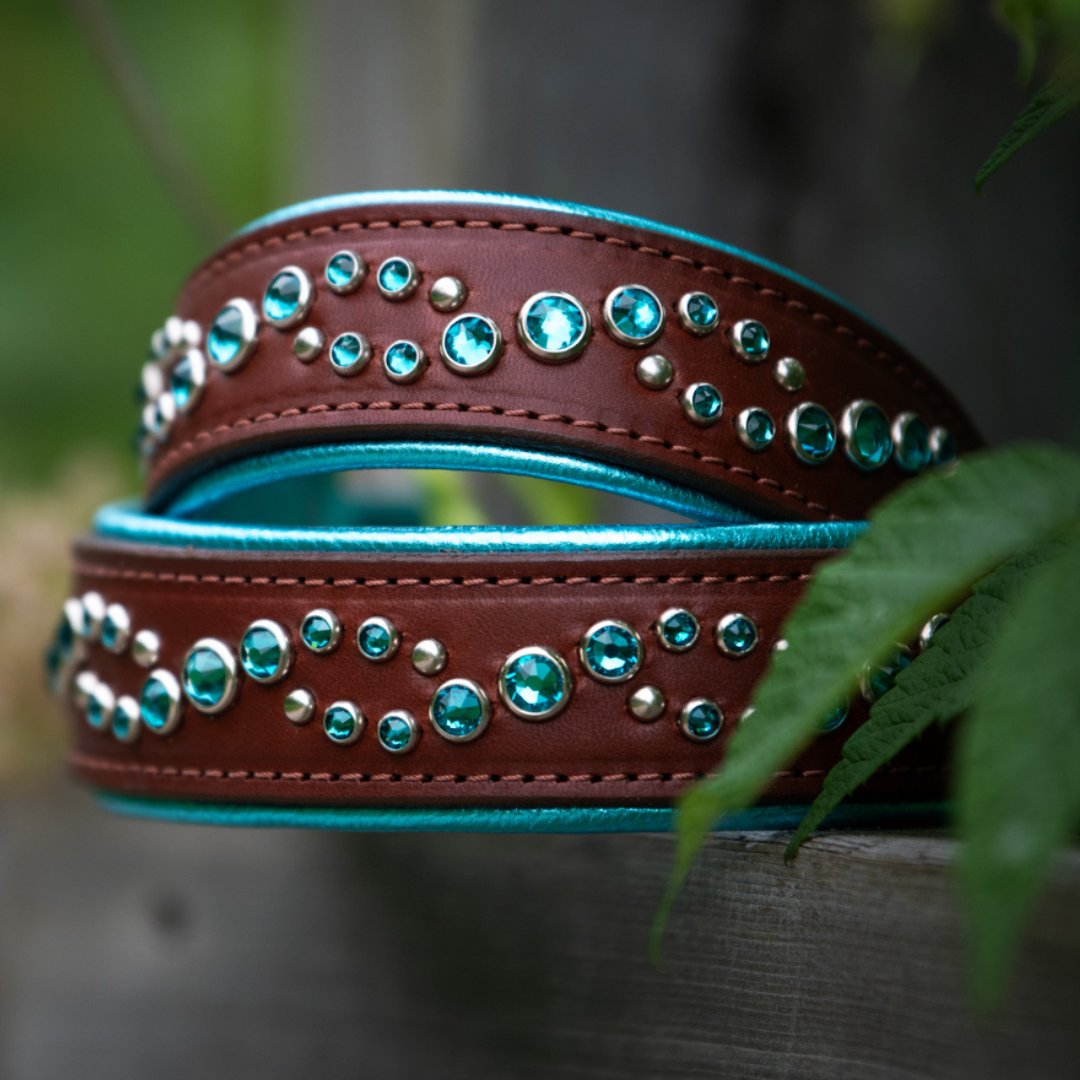
The Wave | Our Bestselling Custom Leather & Crystal Dog Collar
At Fusion By Design Collars, we have fitted thousands of collars for working and competing dogs since 2016. The pattern is always the same. Chafing is rarely about the leather itself. It is about fit, finish, and moisture.
Here is what to watch for before the skin breaks:
- Redness along the neck where the collar sits
- Hair loss in a band around the neck
- Damp or matted coat under the strap
- Head shaking or pawing at the neck
- Reluctance to have the collar put on
Catching these early matters. Once the skin is raw, every collar rubs, even a good one.
The Practical Fit Test for Proper Dog Collar Fit
Proper dog collar fit means you can slide two fingers flat under the strap, and the collar stays put when your dog shakes. If it slides down to the shoulders, it is too loose. If you cannot fit two fingers, it is too tight.

Run this test every few weeks:
- Stand your dog on level ground and let them settle.
- Slide two fingers flat under the collar at the side of the neck.
- Press gently. The strap should touch your fingers, not pinch them.
- Have someone call your dog across the room.
- Watch the collar. It should not rotate or drop toward the shoulders.
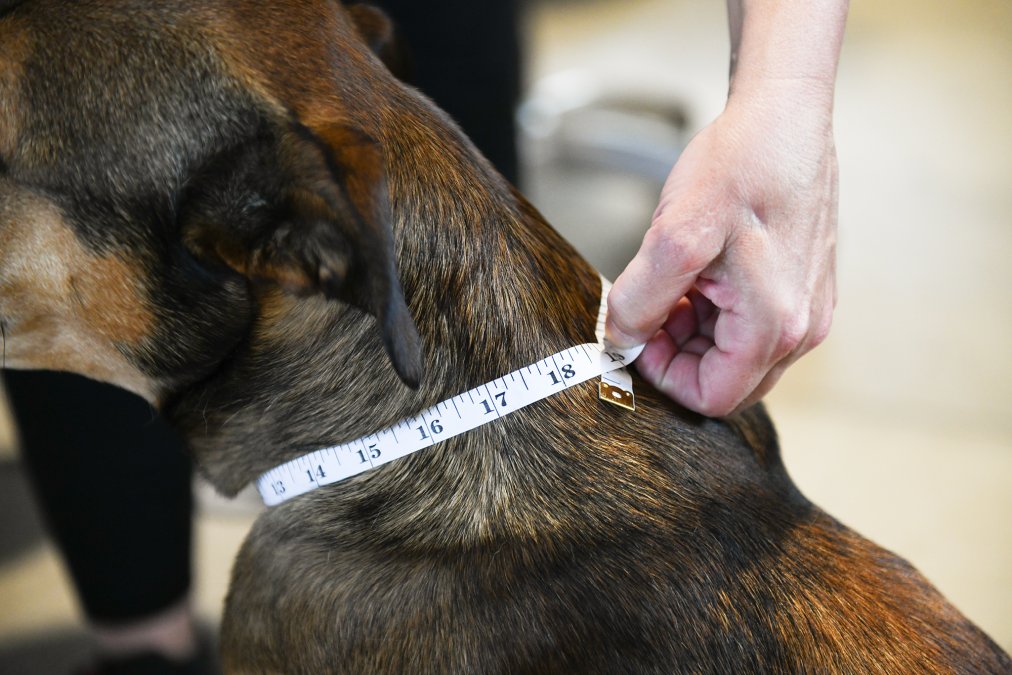
How to Measure Dog Neck for Collar: Sizing Guide
Two-Finger Check and Width Guidance
Collar width changes how pressure spreads across the neck. A narrow strap concentrates force on a small area. A wider strap spreads it out.
- Under 1 inch: best for small dogs with short coats
- 1.25 to 1.5 inches: suits most medium dogs and everyday wear
- 1.5 to 2 inches: good for large breeds, training, and dogs prone to rubbing
Our The Mini Mardi Gras wide custom dog collar uses a 2-inch padded design built for dogs that lead an active lifestyle. The extra width is not just decoration. It is pressure distribution.
Leather-Specific Friction Factors: Edges, Hardware and Moisture
Leather causes chafing in ways nylon does not, and the reasons are mechanical rather than cosmetic. Understanding them lets you fix the cause instead of repeatedly treating the symptom.
Edges and finishing. A leather strap is cut, then the cut edge is either left raw, burnished, or painted with edge finish. Raw edges dry into a hard lip that saws against the coat with every step. Burnished edges are rounded and sealed; painted edges are smooth but can crack and flake with age. Run a fingertip along both edges of the strap. If you feel a ridge, a rough patch, or a flaking lip, that edge is your chafing source.
Break-in and stiffness. New full-grain leather is stiff by design. It softens through flexing, body heat, and conditioning, and during that break-in period it holds its shape against the neck rather than moulding to it. A collar worn straight out of the box for a full day of activity will rub more than the same collar worn in gradually. Break a new collar in over one to two weeks: short wears at home first, then longer walks, conditioning once before first use and again after the first week.
Hardware weight and placement. Buckles, D-rings, and rivets add mass. On a narrow strap, a heavy buckle pulls the collar downward so the throat area takes the load. On a deep-chested or narrow-necked dog, that downward pull is exactly where chafing begins. Look for a tapered or rounded buckle that sits flush with the strap rather than proud of it, and check that rivet heads are smooth and recessed. A D-ring that stands tall will catch on the coat during head turns.
Moisture retention. Leather absorbs and holds moisture longer than synthetic webbing. A damp strap softens, stretches slightly, and sits differently on the neck, while trapping a film of moisture against the skin. That combination, soft leather plus damp skin, is the single most common chafing pattern in humid climates and after water work. Prolonged exposure to this dampness often compromises the protective barrier of the epidermis, making it essential to soothe dry skin before irritation escalates into a more persistent dermatological concern.
Width as pressure distribution. Collar width determines how load spreads across the neck. A narrow strap concentrates force on a small band; a wider strap spreads it. As a working guide:
- Under 1 inch: toy breeds and small dogs with short coats and light loads
- 1.25 to 1.5 inches: most medium dogs, everyday wear
- 1.5 to 2+ inches: large breeds, training, and dogs prone to rubbing
Check these five points on any leather collar before it goes on a dog prone to irritation: edge profile, break-in state, hardware weight and flushness, dryness, and width relative to the dog's neck and coat.
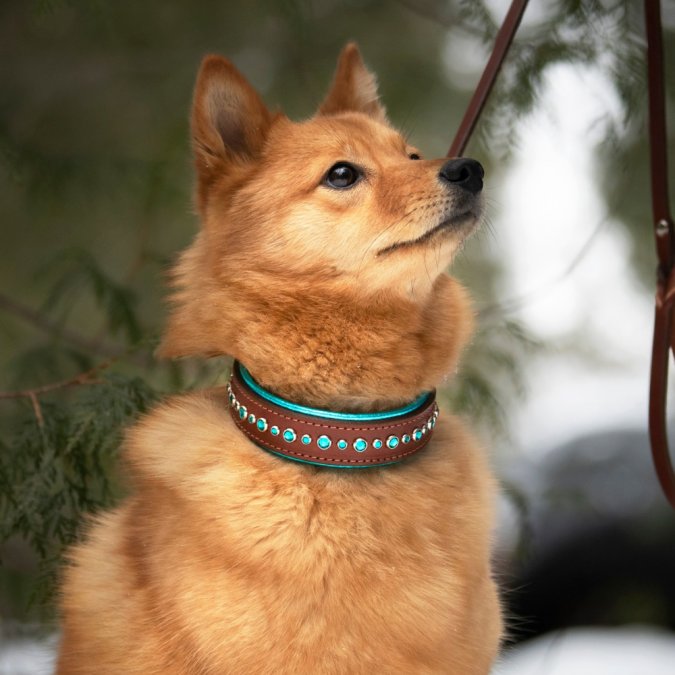
How to Fit a Collar on a Fluffy Dog: 7 Simple Steps
How to Treat Dog Collar Irritation Step by Step
How to treat dog collar irritation depends on how far it has progressed. Mild redness needs rest and a clean collar. Broken skin needs a vet.
Work through these steps in order:
- Remove the collar and switch to a light backup collar or harness for walks.
- Clean the area with a soft cloth and lukewarm water. Pat dry.
- Check the collar for rough edges, stiff patches, or damaged hardware.
- Let the skin rest for 24 to 48 hours, collar-free at home.
- Clean the collar before it goes back on.
- Refit the collar using the two-finger test.
- Watch for two days. If redness spreads, call your vet.
For skin that is already broken, a vet may recommend an antiseptic wash containing chlorhexidine. Do not apply human creams or oils without veterinary advice. Some are toxic to dogs.
Telling Friction Apart from Allergy, Infection or Parasites
Friction looks like a band of redness exactly where the collar sits. Anything else needs a different explanation.
The Wave | Our Most Versatile Custom Dog Collar →
- Friction: redness and hair loss in a clean line under the strap
- Allergy: hives, swelling, or irritation spreading beyond the collar line
- Infection: warmth, pus, crusting, or a bad smell
- Parasites: itching, scabs, and visible fleas or flea dirt
If the irritation spreads past the collar line, or the skin is broken and weeping, see your vet. A collar change will not fix an infection.
Leather Dog Collar Care: Cleaning, Drying and Conditioning
Leather dog collar care comes down to three habits: clean it, dry it fully, and condition it before it cracks. Skip any one and the leather stiffens, which is when it starts to rub.
A simple routine:
- Wipe the strap with a soft cloth after muddy walks.
- Use a leather-safe cleaner for deeper grime, then wipe clean.
- Let the collar air dry away from direct heat.
- Apply a small amount of leather balm once or twice a season.
Do not soak leather. Do not use dish soap or harsh detergents. Both strip the oils that keep the strap supple.
Drying After Rain and Damp Conditions
A wet collar is the most common cause of chafing we see. Damp leather softens, stretches slightly, and sits differently on the neck. It also traps moisture against the skin.
After rain or a swim:
- Blot the collar with a dry towel.
- Hang it flat, not folded, in a well-ventilated spot.
- Keep it away from radiators and direct sun.
- Do not put it back on until it is fully dry.
In humid weather, rotate between two collars so each one dries completely.
How to Prevent Matting Under Dog Collars
Matting under dog collars forms where hair is trapped, rubbed, and kept damp. Long-coated and double-coated breeds are most at risk. The fix is a mix of grooming and collar choice.
- Brush the neck area two to three times a week.
- Keep the coat short under the collar on heavy-coated breeds.
- Choose a smooth or padded lining that glides over hair.
- Remove the collar for grooming and at night where safe.
- Check weekly for tangles forming under the strap.
A padded lining is the single biggest upgrade here. Our Mini De Vil collar uses a padded inner lining designed to cushion the neck and reduce rubbing during walks and play.

The Mini De Vil | Custom Leather Dog Collar
A Prevention Routine for Training, Sports and Wet Weather
Different activities create different friction. A dog doing fast turns on a field loads the collar sideways. A dog swimming wears a wet strap for hours. A dog on a long hike builds up grit under the strap.
Build your routine around the activity:
Situation |
Main Risk |
What To Do |
|---|---|---|
Daily walks |
Light rubbing |
Two-finger fit check weekly |
Training sessions |
Sideways load |
Wider, padded collar |
Water work |
Damp skin |
Dry collar fully after |
Cold weather |
Dry, stiff leather |
Condition monthly |
Long coat breeds |
Matting |
Brush neck 2-3 times a week |
Clean and inspect the collar after every wet or dirty session. Check the fit again after any weight change, and after a coat clip.
Conclusion: Comfort Comes From Fit and Care
Chafing is a fitting problem far more often than a leather problem. Check the fit, dry the collar, and keep the edges smooth. That covers the vast majority of cases.
Where fit is the issue, a made-to-order collar solves it at the source. At Fusion By Design Collars, every piece is handcrafted in Canada from full grain English Bridle leather, with a padded lining and a right fit, right style guarantee. Our Chili custom dog collar pairs that padding with a lighter 1.25-inch build for dogs that need comfort without bulk.
Choose your design and give your dog a collar that fits from the first walk.
Frequently Asked Questions
How do I know if my dog's leather collar is too tight?
You should be able to slide two fingers flat between the collar and your dog's neck without forcing them. If the leather presses into the coat or leaves a groove when removed, it is too tight. A collar that sits snug but allows that two-finger gap distributes pressure evenly and reduces rubbing on the neck. Check the fit monthly, and again after any grooming, because coat thickness changes with the seasons.
Can a leather dog collar cause chafing?
Yes, leather can cause chafing if the fit is wrong, the edges are rough, or the collar stays wet. Friction builds up where stiff leather or metal hardware presses against the neck, especially during training or sports. Choosing a padded lining, smooth leather edges and a tapered buckle reduces that risk. Regular leather dog collar care, including cleaning and conditioning, keeps the strap supple so it moves with your dog instead of against the skin.
What should I do if my dog's skin is red under the collar?
Remove the collar immediately and inspect the area. Clean the skin gently with a soft cloth and lukewarm water, then let it air dry. If the redness is mild friction, keep the collar off until the skin settles and use a backup collar for walks. If you see broken skin, discharge, swelling or hair loss, contact your vet. Conditions such as allergies, infections or parasites need proper diagnosis, and a vet may recommend an antiseptic wash containing chlorhexidine.
How often should I remove my dog's collar to check the skin?
Take the collar off at least once a week for a full neck check. Run your fingers through the coat and look for redness, matting, hot spots or odour. Dogs with sensitive skin or thick coats may need checking every few days. Rotate in a nylon collar or leave the neck bare during rest periods to give the skin a break. Frequent inspection catches irritation before it becomes raw skin.