


Table of Contents
- Leather vs Nylon Dog Collars for Durability: The Short Answer
- Leather vs Nylon Dog Collars Compared Side by Side
- The Best Material for a Dog Collar Depends on the Dog
- Leather Dog Collar Care: Conditioning, Drying and Repairs
- Nylon Dog Collar Care: Cleaning, Drying and Replacement
- How to Choose a Dog Collar for Strength, Fit and Safety
- Total Cost of Ownership: Leather vs Nylon Over Five Years
- Conclusion: Which Collar Lasts Longer for Your Dog?
- Frequently Asked Questions
Last Updated: October 9, 2026
Leather vs Nylon Dog Collars for Durability: The Short Answer
Leather wins on durability for most dogs, provided you maintain it. Full-grain leather resists abrasion, holds its shape for years, and ages rather than degrades.
At Fusion By Design Collars, we've built our whole workshop around that first conclusion.
The leather vs nylon dog collars debate usually gets framed as a simple price question. It isn't. It's a question about how the material fails, when it fails, and what that failure costs you.
Below, we compare both materials on lifespan, water resistance, hygiene, and total cost over five years, then match each one to the dogs it actually suits.
Leather vs Nylon Dog Collars Compared Side by Side
Here's the core comparison before we get into the detail. Leather is denser, more abrasion-resistant, and more repairable. Nylon is lighter, cheaper, and quicker to clean.
Factor |
Leather |
Nylon |
|---|---|---|
Expected lifespan |
5-10+ years with care |
1-3 years typical |
Water resistance |
Good when conditioned |
Good, but holds moisture |
Odour retention |
Low |
High |
Abrasion resistance |
High |
Moderate |
Repairable |
Yes, by a leatherworker |
Rarely |
Cleaning effort |
Moderate, needs conditioning |
Easy, machine washable |
Cost up front |
Higher |
Lower |
Durability and Expected Lifespan
Leather outlasts nylon by a wide margin when both are properly maintained. The reason comes down to fibre structure. Leather is a dense, interlocking collagen network, while nylon is woven webbing that abrades at the edges.
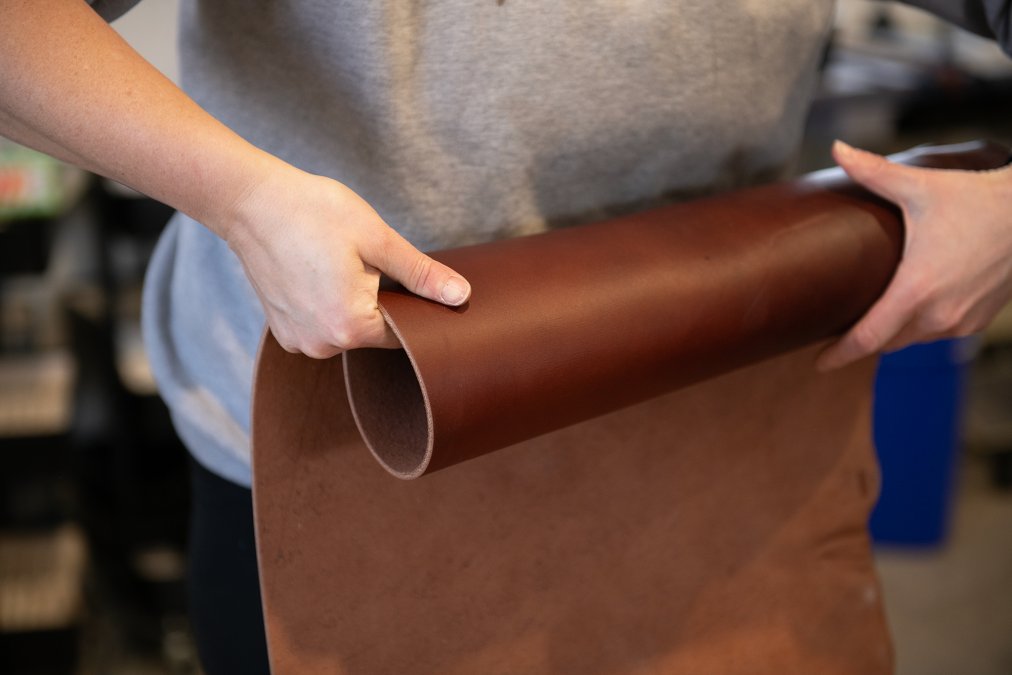
A common mistake is judging a collar by how thick it feels in the hand. Thickness matters less than the cut of the hide. Full-grain leather keeps the strongest outer layer intact. Split leather and bonded leather, often sold as "genuine leather," strip that layer away.
Water, Mud and Moisture Resistance
Both materials handle a wet walk, but they fail in different ways. Nylon absorbs water into its weave, which softens the fibres and slows drying. Leather sheds surface water well but needs conditioning after repeated soakings to stop it drying out.
Mud is the bigger problem for nylon. Grit works into the weave and acts like sandpaper against the fibres. Leather wipes clean because mud sits on the surface rather than inside it.
Odour Retention and Hygiene
Nylon holds odour; leather resists it. That's the short version. Nylon's porous weave traps bacteria, oils, and moisture, and that combination is what smells.
Leather's sealed, oiled surface gives bacteria far less to grip. A leather collar that's been rained on and dried properly rarely develops the sour smell that nylon collars pick up after a few wet walks.
The Best Material for a Dog Collar Depends on the Dog
The best material for a dog collar depends on coat type, activity level, and how often the dog gets wet. There's no universal winner, only a right match.

For a house dog that walks on dry pavements, nylon is perfectly adequate. For a working dog, a swimmer, or a dog in daily training, leather holds up better and stays comfortable longer.
Best Material for Swimming and Water-Loving Dogs
For water-loving dogs, leather edges ahead if you dry and condition it, while nylon is easier but degrades faster. Neither material is truly waterproof, so maintenance decides the outcome.
Nylon dries slowly and stays damp against the neck, which softens the webbing and encourages odour. Leather dries faster on the surface but will crack if you leave it soaked and never condition it.
If your dog swims daily, choose a narrower, lighter collar and dry it after every session. A wide padded collar is comfortable on land but holds more water.
Leather Dog Collar Care: Conditioning, Drying and Repairs
Leather dog collar care takes about ten minutes a month and adds years to the collar's life.

Avoid saddle soap on a daily basis, as it strips oils. Use it only for heavy soiling, then recondition. Keep leather away from radiators, which dry it out and cause cracking.
Repairs are where leather pulls ahead. A good leatherworker can restitch a seam, replace a buckle, or punch a new hole. That's not possible with frayed nylon webbing.
Our own collars, such as The Chili | Custom Dog Collar, use a padded lining and a tapered buckle to reduce bulk.
Nylon Dog Collar Care: Cleaning, Drying and Replacement
Nylon dog collar care is simple: machine wash in a pillowcase on a cool cycle, then air dry completely. Never tumble dry nylon, as heat distorts the weave.
Check nylon monthly for fraying at the buckle and D-ring. Fraying is the first sign the webbing is losing strength, and it spreads quickly once it starts.
The Breckenridge | Wide Custom Dog Collar →
Replacement is the trade-off. A nylon collar that fades, frays, or smells usually gets replaced rather than repaired. Over five years, that adds up.
How to Choose a Dog Collar for Strength, Fit and Safety
Choosing a dog collar comes down to four checks: width, fit, hardware, and stitching. Get those right and the material choice becomes much less risky.
Collar width should match the dog's neck size and build.
Fit matters more than most owners realize. You should fit two fingers between the collar and the neck.
Hardware is where cheap collars fail first. Look for solid brass or stainless steel buckles and D-rings. Plastic hardware can crack and fail under load.
Stitching should be even and tight, with no loose threads at stress points. Double stitching at the buckle is a good sign.
Hardware and Construction: Where Collars Actually Fail
Hardware and construction are the real failure points, not the strap material itself. Most collar breakages we see reported trace back to a bent or cracked buckle, a corroded D-ring, or stitching that pulled out.
Abrasion resistance gets all the attention, but a collar rarely wears through in the middle. It fails at the buckle, the D-ring, or the seam. That's why we build ours with a tapered buckle to cut bulk and weight, and why we pad the lining to spread pressure.
For dogs that pull hard or work in training, a wider collar with quality hardware distributes load better across the neck.
Total Cost of Ownership: Leather vs Nylon Over Five Years
Most comparisons stop at the price tag. That is the least useful number in the decision. The honest way to compare leather and nylon is to add up everything you spend on the collar over five years, purchase, replacements, cleaning supplies, hardware repairs, and the cost of a failure at the wrong moment.
The four cost lines that matter
- Purchase price. Nylon is cheaper up front. Leather costs more because the hide, the hardware, and the labour are all more expensive. This is the only line where nylon wins.
- Replacement frequency. A nylon collar on an active dog typically needs replacing every 12-24 months once fraying, fading, or odour sets in. Over five years, that is two to four collars. A well-maintained full-grain leather collar usually lasts the full five years and often longer.
- Maintenance supplies. Leather needs a tin of conditioner and a cloth, a small one-off cost that lasts years. Nylon needs nothing beyond a cool wash, but it also cannot be restored once it starts to fail.
- Repair and hardware replacement. A leatherworker can restitch a seam, replace a buckle, or punch a new hole for a modest fee, extending the collar's life by years. Frayed nylon webbing is not repairable in any practical sense; the collar is replaced.
Why the five-year view flips the answer
Run the numbers with realistic assumptions and the pattern is consistent: the nylon collar that looked cheaper on day one ends up costing more once you count two to four replacements, the hardware that corrodes or flakes on budget webbing, and the inconvenience of a collar failing mid-walk.
There is also a hidden cost that never appears on a receipt: the risk of a collar failing under load. A bent buckle or a pulled stitch on a nylon collar can mean a dog slips a lead at the worst possible moment.
A simple way to decide
If you replace collars on a whim and never condition them, nylon's low upfront price is genuinely the better deal. If you are willing to spend ten minutes a month on care, leather wins on total cost over any horizon longer than about two years, and the gap widens the longer you keep the collar.
For owners who want a collar built to last and fitted properly, our made-to-order pieces, including The Wave | Our Bestselling Custom Dog Collar with its 1.5" padded build, are designed around that five-year view rather than a single season.
Conclusion: Which Collar Lasts Longer for Your Dog?
Choosing between leather and nylon comes down to how much maintenance you'll actually do. Leather lasts longer, resists odour, and can be repaired. Nylon is easier to clean and cheaper to replace, but it frays, fades, and holds smell.
If your dog trains, swims, or works, leather is the better long-term investment. If your dog mostly naps on the sofa, nylon will do the job.
Frequently Asked Questions
Which lasts longer, a leather or nylon dog collar?
A properly maintained full-grain leather collar usually outlasts nylon. Full-grain leather with quality stitching resists abrasion and stretching for years, while nylon webbing frays, fades and stiffens with repeated washing and sun exposure. Nylon is cheaper to replace but tends to be replaced more often. For a dog in daily training or roughhousing, leather generally delivers the longer service life, provided you condition it and let it dry away from direct heat.
How does rain and moisture affect leather and nylon dog collars?
Nylon absorbs less water and dries faster, but repeated soaking can loosen the weave and trap odour. Leather soaks up water and must dry slowly at room temperature, away from radiators, then be reconditioned to stop it cracking. For water-loving dogs that swim often, a nylon collar is easier to live with day to day, while leather suits dogs that get wet occasionally and are dried and conditioned afterwards.
How do you clean and care for a leather dog collar?
Wipe leather with a damp cloth and mild soap, then let it air dry naturally. Apply a leather conditioner two to four times a year, or more often if the collar gets wet, to keep full-grain leather supple and prevent cracking. Check stitching and hardware each month, and store the collar flat or hanging by the buckle. Well-conditioned leather develops a patina rather than wearing out.
What is the best material for a dog collar for an active dog?
For dogs in training, canine sports or daily outdoor work, full-grain leather with solid hardware is the stronger choice. Leather holds its shape under load, resists abrasion from brush and roughhousing, and does not fray at the edges the way nylon webbing can. Look for padded, wide leather collars with reinforced stitching and a tapered buckle to reduce bulk, and confirm the fit sits snug without pressing on the throat.
Is leather or nylon better for a dog with a sensitive neck?
Fit matters more than material, but padded leather usually causes less chafing than flat nylon webbing. A padded lining spreads pressure across the neck, while a narrow nylon collar concentrates it on a thin strip. Whatever you choose, measure the neck, allow two fingers of slack, and check for rubbing behind the ears after exercise. Custom-made collars that match your dog's exact measurements reduce irritation from a loose or tight fit.
The real challenge isn't picking a material. It's finding a collar that fits properly and holds up to daily use. Fusion By Design Collars handcrafts made-to-order leather collars in Canada from full-grain English Bridle leather, with padded linings, customisable hardware, and a right fit, right style guarantee, plus free worldwide shipping. Choose your design and get a collar built for the years ahead.