


Table of Contents
- Why Dog Owners Look for Custom Gear
- Custom Gear Compared: Materials, Widths and Prices
- Full Grain Leather Dog Collar Durability: What Actually Lasts
- Custom Dog Collar Sizing Guide: Getting the Fit Right First Time
- Luxury Dog Collar Maintenance Tips for Working Dogs
- Matching the Collar to the Dog: Four Real-World Use Cases
- Conclusion: Choosing Your Custom Gear with Confidence
- Frequently Asked Questions
Last Updated: October 2, 2026
Why Dog Owners Look for Custom Gear
When a collar you have relied on for years no longer fits how you train, travel or compete, the search for custom gear starts with one practical question: will the next collar hold up? At Fusion By Design Collars, that question drives thousands of conversations with handlers who need gear built for real work, not photographs.
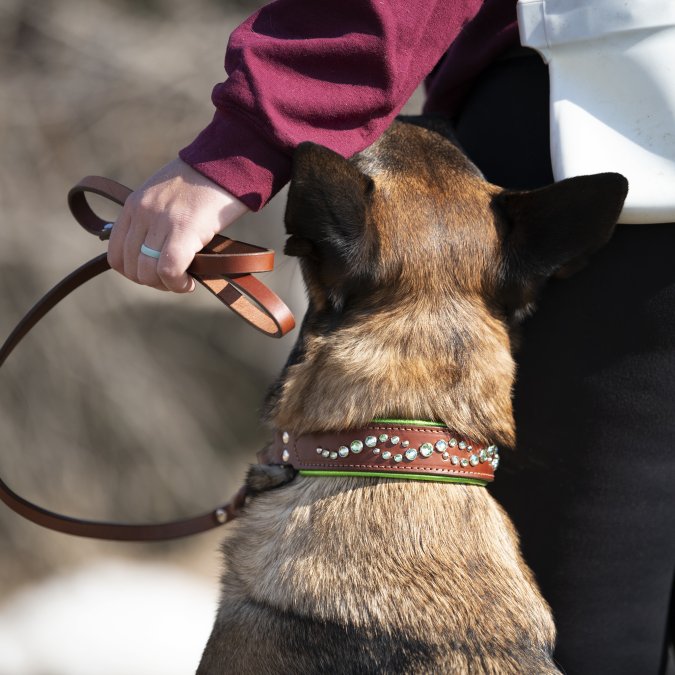
Best Leather Dog Collars for Training: 2026 Guide
The frustration is rarely about style. It is about fit, hardware and whether a made-to-order piece survives a season of training.
Most owners share the same three complaints: sizing that never quite matches a dog's neck shape, especially on broader-chested working breeds; hardware that corrodes or bends under load; and leather that looks beautiful on arrival and cracks within months.
A proper custom gear purchase solves all three, provided you know what to compare. Below, we break down materials, widths, sizing and maintenance so you can judge any alternative on measurable terms rather than marketing copy.
Custom Gear Compared: Materials, Widths and Prices
Custom gear for dogs is best compared on four axes: strap material, width, hardware, and how the material behaves when wet. Get those right and the collar will outlast several mass-produced replacements.
Full grain leather is the top layer of the hide, where the fibres are tightest.
Material comparison at a glance
Material |
Water resistance |
Break-in time |
Best for |
Watch out for |
|---|---|---|---|---|
Full grain leather |
Moderate (needs conditioning) |
Days to weeks |
Everyday wear, patina lovers |
Drying out if neglected |
Latigo leather |
Good |
Short |
Daily wear, wet climates |
Heavier than bridle |
English bridle leather |
Good |
Moderate |
Daily Wear, Working and competition dogs |
Firmer feel at first |
Biothane |
Excellent |
None |
Swimming, mud, kennels |
Stiffer drape, no patina |
Quality PU vegan leather |
Low to moderate |
None |
Style-led buyers avoiding animal products |
De-lamination if backing is poor |
Matching material to the dog, not the trend
Handlers replacing a worn collar often buy the same material again out of habit. That is usually a mistake. If the old collar failed from water exposure, Biothane solves the problem outright; if it failed because the leather dried and cracked, the fix is a conditioning routine, not a different strap.
Full Grain Leather Dog Collar Durability: What Actually Lasts
Durability in a full grain leather dog collar comes down to the hide, the lining and the hardware, in that order. The strap is rarely the part that fails first.
Why the lining and hardware decide the lifespan
For more on how leather is graded, the Leather Working Group's material standards explain the environmental and quality benchmarks used across the industry.
Custom Dog Collar Sizing Guide: Getting the Fit Right First Time
A custom dog collar sizing guide starts with one measurement: the neck circumference at the widest point, taken snugly with a soft tape. Add roughly two fingers of slack, then compare that figure against the maker's size chart rather than guessing between sizes.
Three checks catch most sizing errors before you order:
The Breckenridge | Wide Custom Dog Collar →
- Measure twice, at different times of day, since neck size shifts slightly after exercise
- Confirm the collar's adjustment range covers your measurement with room on both sides
- Note whether the maker measures the strap end-to-end or the finished inner circumference
Luxury Dog Collar Maintenance Tips for Working Dogs
Luxury dog collars last longest when maintenance matches the work the dog does, a collar worn daily in wet fields needs different care from one worn at weekend shows. The routine below covers the two components that decide lifespan: the strap and the hardware.
Strap care by material
Leather (full grain, latigo, bridle). Wipe the strap with a damp cloth after muddy sessions, then dry it away from direct heat, which dries leather out and speeds cracking. Once dry, work in a little leather conditioner with your fingers, focusing on the strap edges and the buckle fold where flexing is greatest. Daily outdoor collars typically need conditioning every four to eight weeks; a show collar worn occasionally may only need it two or three times a year.
Hardware longevity: what to inspect and how often
Hardware is the most overlooked failure point on any collar, and it is worth a two-minute check every month.
- Buckle closure. It should still snap shut with a firm, positive feel. A buckle that closes softly or slips under light tension is on its way out.
- Contact points. Look at where the buckle meets the strap, not just the finish. Solid brass wears to a dull sheen; plated alloys show a different colour underneath, which tells you the plating is nearly through
- Rivets and stitching. Check the buckle fold stitching for fraying. On a padded collar, this is usually the first thing to fail, well before the strap itself.
A simple stress-test you can run at home
You do not need laboratory equipment to get a rough read on durability. With the collar off the dog, hold the strap either side of the buckle and apply steady, firm tension, not a sharp yank, for a few seconds. Then inspect:
- Whether the buckle deforms or the pin shifts out of alignment.
- Whether the stitching at the buckle fold stretches or opens.
- Whether the leather around the rivets shows cracking or stretching.
Rotation and rest
Rotate collars if you own more than one, a rest day lets leather recover its shape and extends its working life considerably. For dogs that swim regularly, a quick freshwater rinse after salt or chlorine exposure keeps both leather and metal in better condition. Store leather collars flat or hanging, away from direct sunlight, rather than coiled tightly in a bag.
Matching the Collar to the Dog: Four Real-World Use Cases
The right collar depends on the job. These four scenarios cover most of what working and active dogs actually do.
Conclusion: Choosing Your Custom Gear with Confidence
The hardest part of replacing a collar is trusting that a made-to-order piece will fit and last when you cannot try it on first. That risk is real, which is why fit guarantees and clear sizing charts matter as much as the leather itself.
Frequently Asked Questions
What makes premium full grain leather better for dog collars?
Full grain leather keeps the outermost layer of the hide intact, so the fibres stay tightly packed and resist stretching, cracking and abrasion far better than split or corrected-grain leather. Latigo and English Bridle tannages add weather resistance and a supple finish. A well-made full grain collar softens with wear instead of breaking down, which is why it holds up to daily training, swimming and rough terrain. Padded linings and solid hardware further extend its working life.
How do I choose the right custom leather collar for my dog?
Measure the neck snugly with a soft tape where the collar normally sits, then add roughly two fingers of space for comfort. Match the width to the dog: narrow, padded styles such as The Chili suit smaller or finer-framed dogs, while wide 2 inch to 2.25 inch designs such as The Breckenridge and The Rio spread pressure across the neck for larger breeds. Finally, decide on leather, crystal and hardware options before ordering, because made-to-order gear is cut to your measurements.
Are crystal dog collars durable enough for everyday use?
Yes, provided the crystals are properly set into quality leather. Hand-set crystals on full grain leather with a padded lining stay put through walks, training and travel; the risk comes from glued crystals on thin, flexible straps. For dogs that swim or roll in mud constantly, a simpler leather design with minimal crystal coverage may suit better. Always check the setting method and the leather underneath before buying.
How does custom-made gear compare to mass-produced dog collars?
Mass-produced collars are cut to standard sizes and assembled quickly, which shows up in thinner leather, lighter buckles and glued rather than stitched details. Made-to-order gear is built around your dog's exact measurements, uses heavier hardware and padded linings, and can be personalised with engraving or crystal colour choices. The trade-off is a longer production window and a higher price, but the collar is far less likely to rub, stretch or fail under serious training.
What should I check before ordering a collar for an upcoming competition?
Confirm the production window before you order, since made-to-order pieces are not pulled from a shelf. Measure the neck twice, at different times of day, and note the width and weight of the collar against your dog's build. Ask how the maker handles fit issues and hardware faults, and check whether identification details such as engraving are included. Ordering early leaves room for adjustment before competition day.